
In 2021 there were more than 7 million people living in Canada aged 65 or older. 73% of these individuals had at least 1 of the 7 below common chronic diseases:
- Hypertension 65.7%
- Periodontal disease 52.0%
- Osteoarthritis 38.0%
- Ischemic heart disease 27.0%
- Diabetes 26.8%
- Osteoporosis 25.1%
- COPD 20.2%
Aging is something that is unavoidable, but there is a difference in how we age.
Primary aging is our chronological age – the slow aging process that happens with the gradual deterioration of our body throughout our life.
Secondary aging is all the lifestyle conditions. It’s what happens when we don’t take care of ourselves. Maybe we don’t exercise, we smoke, or eat a poor diet – its all the things that accelerate the aging process.
This chart illustrates how body function is better represented than primary or secondary aging.
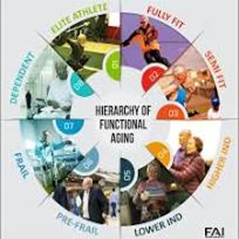
Groups 1, 2 and 3: the Elite Athlete, Fully and Semi-Fit. These are the people that stay active just as they did in their 40s and 50s.
Group 4: These are the people where they’re not fit, but they also have not really lost any function. These would be people who walk every day, and maybe do an occasional fitness class.
Group 5: These people aren’t really doing much to keep their body in shape, but also, are not really functionally declining either.
On the other side of the circle – Groups 6, 7 and 8 – the Pre-frail, the Frail and the Dependent are self explanatory.
What is your aging profile on this chart? It’s good to not only recognize where you are on the chart, but also the trajectory of where you’re going.
The good news is research has shown that with changing our lifestyle choices of diet, activity levels, and keeping a positive attitude, we can slow or minimize functional decline.
This brings us to the point of why more older adults are coming to yoga.
First, yoga is a whole body exercise. It’s not just strength training, not just flexibility training, and not just mobility or agility. It gives the whole complement of training including posture. I’m sure you have noticed seniors where their posture has deteriorated due to a whole collapse of the body, that then creates this foundation for arthritis and back pain problems. Yoga has this wonderful ability to counteract this process of structural aging.
Yoga also works on body awareness. It facilitates that mind/body connection. A recent study on yoga’s effects on brain health concluded that there was solid evidence that yoga helps improve brain function – developing new connections which results in improved cognitive skills such as learning and memory.
The choice is yours – how old do you want to act?
I hope you will consider getting started with a yoga practice that will help minimize your age-related decline so that you can live an active and healthy life.
Namaste